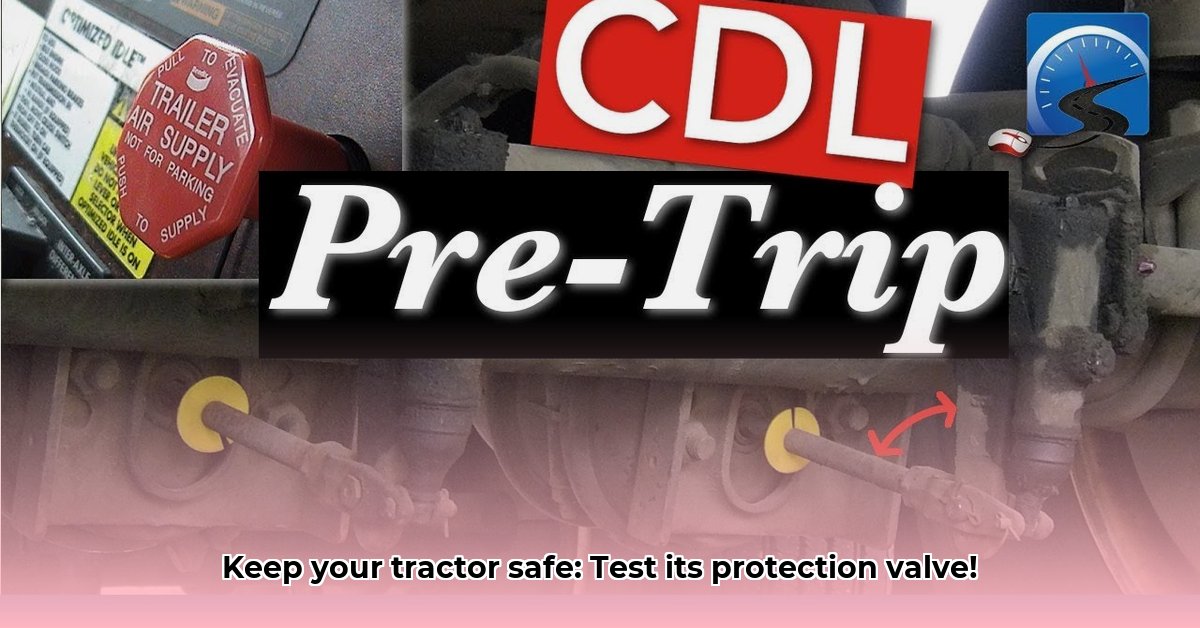
This guide provides clear instructions on testing your Tractor Protection Valve (TPV), a critical safety component for trailer operation. Regular testing ensures safe braking and prevents accidents. Following these steps will help you maintain optimal safety.
Safety Precautions: Protecting Yourself and Your Equipment
Prioritize safety throughout the entire testing process. Before beginning, always disconnect the air supply to the trailer. This prevents unintended brake activation and minimizes risk. Wearing safety glasses and gloves is also strongly recommended. Never attempt this procedure if you are unsure about any step.
Tools and Equipment Needed
Before starting, gather the necessary tools for a smooth and efficient inspection:
- Air pressure gauge (to accurately measure air pressure)
- Wrench (size depends on your tractor model; consult your owner's manual)
- Air leak detection solution (e.g., soapy water)
- Helper (optional, but recommended for added safety and assistance)
Step-by-Step TPV Testing Procedure
Follow these steps carefully for an accurate TPV test:
Secure the Trailer: Ensure the trailer's air supply valve is fully closed. This isolates the trailer's brakes from the tractor's air system.
Initial Pressure Check: Use your air pressure gauge to record the air pressure in your tractor's air tank. Note this baseline reading; it should fall within the range specified in your tractor's manual. Does your pressure gauge provide accurate readings consistently? Regular calibration is key for accurate testing.
Brake Engagement: Fully apply the tractor's service brakes. This puts the TPV under pressure, mirroring real-world conditions.
Trailer Disconnection: Carefully disconnect the trailer from the tractor. Listen for the rush of air releasing from the trailer. This activates the trailer's emergency brakes, directly linked to the TPV. Did you hear a distinct, even release of air? An uneven or weak release could indicate a problem.
Leak Detection Inspection: Systematically inspect all connections and the TPV itself for leaks. Use your soapy water solution to check for escaping air bubbles. Note the location of any leaks. Are you seeing any significant bubbles forming? This is a sure sign of a leak.
Reconnection and Pressure Reassessment: Carefully reconnect the trailer to the tractor. Re-engage the service brakes and check the air pressure. Any significant pressure drop indicates a problem. Maintaining stable pressure is crucial for safe operation.
Brake Release and Final Check: Release the service brakes and conduct a final pressure check. The pressure should remain stable. A consistently stable reading indicates a healthy TPV and air brake system.
Interpreting Your Results
Successful Test (TPV Functioning Correctly): Stable air pressure throughout the process and proper trailer brake engagement indicate a healthy TPV.
Failed Test (TPV Requires Attention): Significant pressure drops, unusual noises (hissing), or failure of the trailer's emergency brakes require immediate attention. A qualified mechanic should inspect and repair the TPV.
Troubleshooting Common Problems
This table addresses common TPV issues and their solutions:
| Problem | Possible Cause | Solution |
|---|---|---|
| Low Air Pressure | Leaks in the air system, low tank pressure | Repair leaks, refill the air tank to the correct pressure. |
| Slow Air Release | Clogged emergency line | Inspect and clear the line using compressed air. |
| No Air Release upon Disconnect | Faulty TPV or incorrect valve operation | The TPV may need replacement; seek professional assistance. |
| Trailer Brake Lockup | TPV malfunction preventing air release | Requires immediate professional mechanical attention. |
Routine Maintenance Schedule
Regular inspections prevent major issues. Consult your tractor's manual for recommended TPV testing frequency, but aim for at least semi-annual checks. Preventative maintenance saves time and money in the long run.
Conclusion
Regular TPV testing is vital for safe trailer operation. Addressing any issues promptly ensures your safety and that of others on the road. When in doubt, consult a qualified mechanic. Their expertise offers you peace of mind and protection.